“Text by Caleb Melchior. This article originally appeared in the February 2016 issue of Horticulture.”
Japanese Maple
Acer palmatum
Text by Caleb Melchior. This article originally appeared in the February 2016 issue of Horticulture.
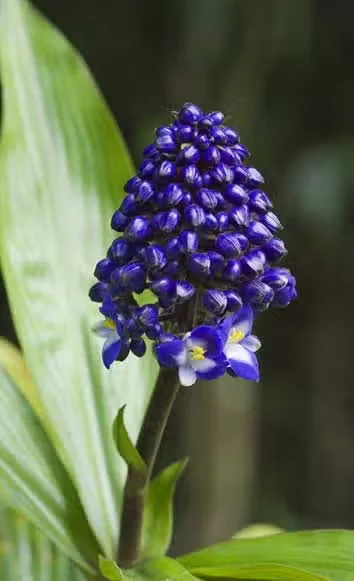
Ready for something completely different? Picture three- to four-inch wands of tightly packed flowers in rich, pure blue, with just a tinge of violet in their shadows. Now crank up that saturation by about 300 percent and you'll start to get a sense of the blue gingers' incredible hue. Trust me, it's breathtaking.
The most commonly available species, typically just labeled "blue ginger" (Dichorisandrathyrsiflora, USDA Zones 9–11), starts out with gawky upright stems ringed with shiny green leaves marked lightly in purple and silver. Toward summer's end, each stalk produces a terminal three- to four-inch wand of nubby blue buds that swell to fat beads before popping open into golden-eyed, starry blue flowers. In temperate climates, what I love is how long the flowering lasts — six to eight weeks! In tropical conditions, they open more quickly, but the plant produces multiple flushes of bloom throughout autumn.
Weeping blue ginger (D. pendula, Zones 9–11) has a more graceful habit than its more commonly seen cousin. Its glossy, elongated leaves appear on an upright plant that starts to weep elegantly as it matures. The saucer-shaped flowers are flecked with white, giving them a wide-eyed look that I just adore. They come in wispy dangling clusters, often with three or four open blossoms at a time. Unlike standard blue ginger with its heavy flushes of bloom, this species blooms sporadically throughout the year.
Both blue ginger species are surprisingly easy to grow, especially in dappled shade with regular moisture for the lushest growth. If you're lucky enough to have a truly tropical garden, grow your blue ginger in the ground in a humus-rich, partially shaded spot. For those of us in temperate climates, grow these exotic beauties in containers you can shift to a warm, sunny window for winter. It's an easy extra step that's well worth the effort.
Growing blue ginger: 7 essential tips1. In tropical climates and during temperate summers, blue gingers prefer part shade2. They hate the cold, so move potted blue gingers indoors when nighttime temperatures start to dip in fall3. When wintering indoors, give them more sun — a south-facing window is ideal4. Keep the soil moist and provide extra humidity when they're blooming5. Blue gingers don't go dormant or need a rest period6. Weeping blue ginger can be top pruned to maintain the height you want7. Prune blue gingers only just after they bloom
Photo credit: Ricardo de Paula Ferreira / Shutterstock.com