“As an Amazon affiliate, we earn from qualifying purchases made through affiliate links.”
Calathea
Calathea orbifolia
As an Amazon affiliate, we earn from qualifying purchases made through affiliate links.
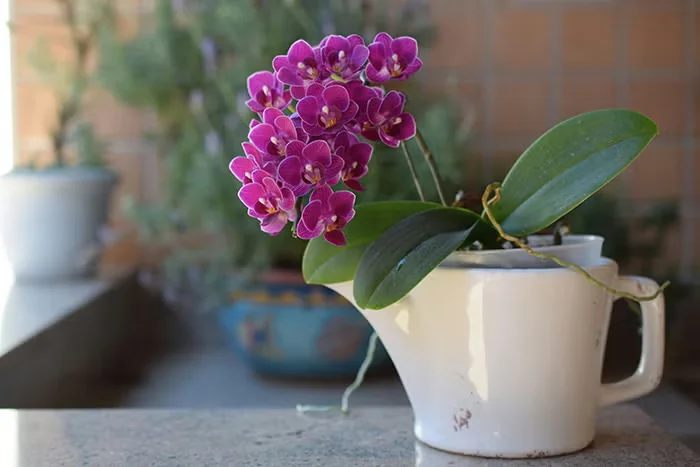
Most of us catch the orchid bug with a moth orchid (Phalaenopsis spp. and cvs.), and no wonder—they're perfectly happy in a typical home environment. These lovelies bloom in winter and early spring, which makes them such popular gift plants. Here are my tips for keeping your Phalaenopsis orchids thriving. Fair warning: once you succeed with Phalaenopsis, you'll only fall deeper down the orchid rabbit hole!
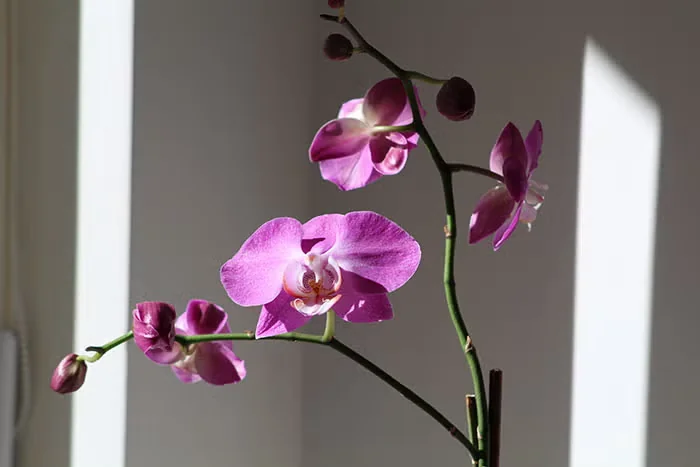
Light: I've found that moth orchids love bright light but absolutely can't handle direct sun. An east-facing window works beautifully, or a south- or west-facing window that's shaded by trees or fitted with sheer curtains.
Temperature: Phalaenopsis orchids like it between 60˚F and 85˚F all the time. They can handle brief spells up to 95˚F, and here's a tip I love—several weeks of nighttime temps around 55˚F in the fall actually helps trigger those gorgeous blooms.
Water: Unlike some orchids, Phalaenopsis don't have any way to store water, so please don't let the pot dry out completely. But don't let it sit in water, either. I water thoroughly, let the mix get almost dry, then water again. You'll find your rhythm, but keep in mind it shifts with the seasons. To boost humidity, I set the pot on top of (not in!) a tray filled with moist gravel.
Repotting: In my experience, Phalaenopsis orchids need repotting every one to three years. They really need a porous, well-draining mix—grab one labeled for orchids. Young moth orchids grow fast and might need a bigger pot every year, while mature plants can stay in the same pot with fresh medium every few years.
Feeding: If your Phalaenopsis is in a bark-based mix, give it high-nitrogen fertilizer twice a month during the active growing season (usually warm weather). A balanced fertilizer works fine for soil-based mixes. I've found that fertilizers rich in phosphorus (that middle number in the N–P–K rating) really help push those blooms. Ease off on feeding your moth orchid when the cooler months roll in.
Source: The American Orchid Society
Here are some reads I'd recommend:
If you want to really master orchid care, The Orchid Whisperer by Bruce Rogers walks you through all the essentials—light, watering, repotting, and more.
For choosing and caring for all kinds of indoor plants, I love Houseplants: The Complete Guide to Choosing, Growing, and Caring for Indoor Plants by Lisa Eldred Steinkopf—it's become my go-to reference.