“Over the years I've written about so many interesting vegetables, fruits and flowers, and I've loved sharing new varieties — some discovered as natural mutations, others the result of breeders'…”
Bird of Paradise
Strelitzia reginae
Over the years I've written about so many interesting vegetables, fruits and flowers, and I've loved sharing new varieties — some discovered as natural mutations, others the result of breeders' purposeful work (pun intended, I just can't help it). Many plants I featured decades ago just needed the right marketing touch to go from oddball to almost universally loved. The alligator pear was a dud until it became the avocado; the Chinese gooseberry couldn't move off the shelves until it was reinvented as the kiwifruit.
I've stayed happy with some of my recommendations, like the seedless 'Saturn' and 'Niagara' grapes for Northern growers and the various columnar apple trees for anyone wanting to grow apples in pots or tight spaces. But I curse the day I got it in my head to try growing hardy kiwi cultivars in New England. For reasons still unknown, I've never produced a single edible kiwifruit from self-fertile or male and female varieties imported from Russia, China and Korea. Trust me, I tried — and wasted years of valuable growing space and time!
My current obsession is persimmons. I'm tracking four varieties in the yard. The native American 'Meader' tree seems like a bust with its trial-size fruit. (Every vegetable and fruit catalog really should include a silver dollar or dollar bill for scale in any picture of featured fruit.) I'll give it another two or three years before deciding whether to chop the tree down — maybe give the wood to a woodworker friend for custom golf clubs, knife handles, or guitar components. But I digress.
One plant I always wanted to try was the so-called Meyer lemon. I knew it's a sweet variety with a reputation for being easy to grow, but I'd heard that about the hardy kiwis, too. When I was on the Italian island of Ischia, near Capri, I encountered some lemons so sweet their juice was actually added to orange juice — it gave it a zing without cutting the sweetness at all. I suspect these were either Meyer lemons or similar hybrids.
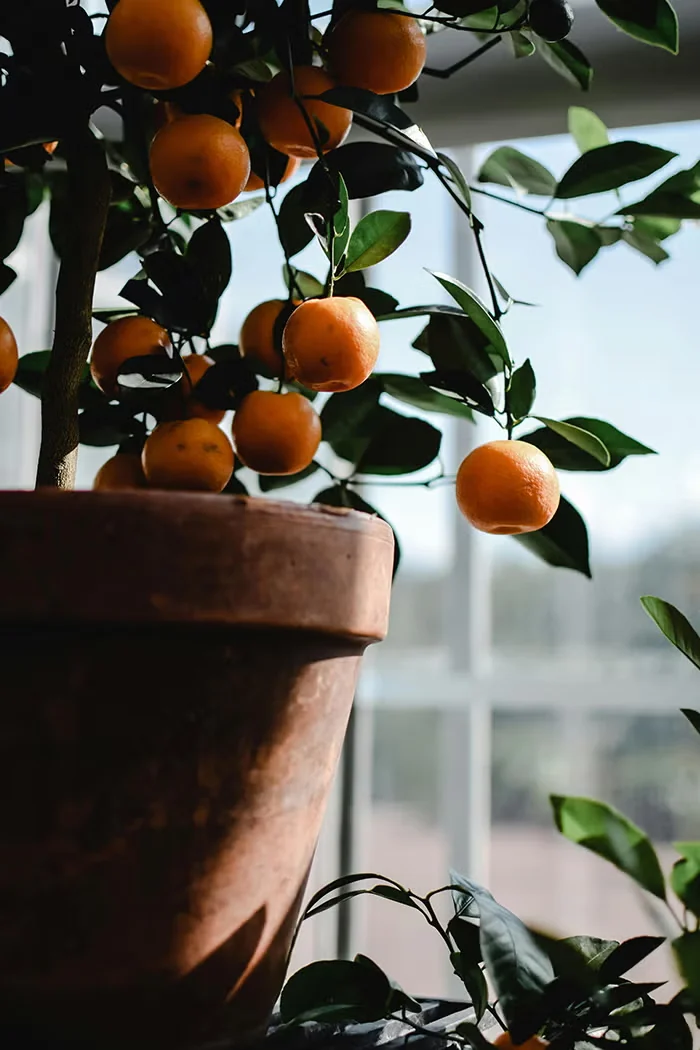
In any case, the Meyer lemon tree my kids gave me for Christmas was a joy from the start. It had lustrous foliage, one green lemon on it about the size of a lime, and a bunch of deliciously scented flowers. I figured if it did nothing but perfume the air for a month each year, it would still be a winner in my book.
But it did way more than that. The bushy little tree (only 15 inches tall!) kept by a sunny window and put outside in May produced 9 full-size commercial-grade lemons. No wonder that in 1908, Mr. Frank Meyer, a USDA plant explorer, imported a few trees from near Peking, where they were commonly grown in home gardens or as ornamental shrubs.
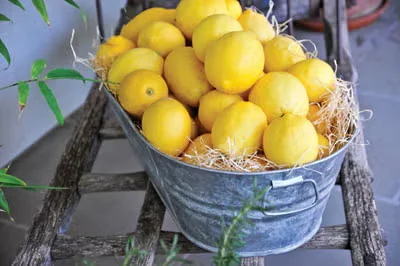
It turns out the tree isn't a true lemon but a hybrid, probably involving a lemon and either a mandarin or an orange. The Meyer lemon skin, noticeably lacking in oils, doesn't smell like regular lemon skin. And the fruit is rounder than the common commercial lemon varieties you see in stores. As you'd expect, the juice is less acidic than other cultivars, so experiment with substituting them for other varieties in your favorite recipes.
These plants are cold hardy compared to other lemons, and a heavily bearing diminutive Meyer will definitely get your gardening friends talking — and maybe even a little envious.
Lemon-loving Californians used to avoid growing early Meyer lemon trees because they carried citrus tristeza virus (CTV), which as far as I know didn't harm the Meyer tree or fruit but threatened other varieties. A CTV infection, sometimes called quick decline, causes citrus leaves to yellow and wilt. The virus is blamed for nearly wiping out citrus cultivation in the 1920s in Argentina, Uruguay and Brazil. (Tristeza means sadness in Portuguese and Spanish.) Credit goes to Don Dillon, Sr., for discovering and propagating a CTV-free Meyer cultivar that's displaced the older variety in California and most other places.
Commercial Meyer lemon crops tend to mature in November, December and January. In the Golden State you'll see them in the Central and Sacramento valleys, but they thrive in places like Florida and Texas too, and they'll even crop up (another pun, sorry) on patios in Rhode Island and South Dakota. From what I've seen, patio-grown Meyer fruits are every bit as good as the commercially grown ones.
The Meyer lemon tree has rich foliage, smells amazing, matures quickly, bears delicious fruit, and can be grown in a pot. Honestly, what more could any gardener ask for?
Greg Coppa writes from his home in Rhode Island.