“If you haven't met rippled peperomia yet, you're in for a treat! Peperomia caperata is one of those easygoing houseplants with truly fascinating leaves. It handles low light like a champ, forgives…”
Calathea
Calathea orbifolia
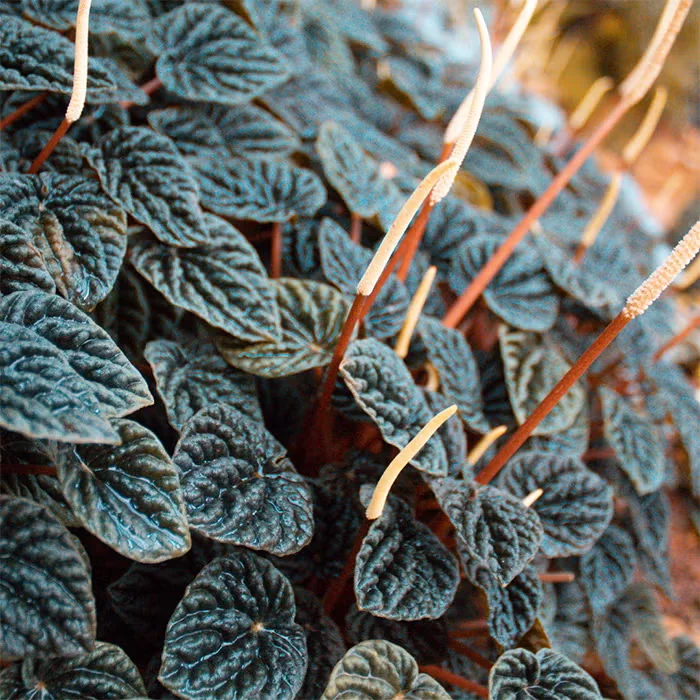
If you haven't met rippled peperomia yet, you're in for a treat! Peperomia caperata is one of those easygoing houseplants with truly fascinating leaves. It handles low light like a champ, forgives you when you forget to water, and rarely needs repotting. What I love most is that dark green, beautifully textured foliage—it's honestly the main attraction. Grow it in brighter light and you might even be rewarded with some delightfully quirky flower spikes.
Common name: Rippled peperomia
Botanical name: Peperomia caperata
Exposure: Low to bright light; no direct sun
Flowers: Just like its peperomia cousins, this one sends up those fun little skinny spikes in cream to greenish shades.
Foliage: Peperomia caperata has these gorgeous rounded leaves in dark green with even darker green ridges running through them. I always get a kick out of the new leaves popping up from the center—they can look pinkish at first before settling into that deep green. Older leaves sometimes take on a lovely reddish tint. And if you want more drama, there are several named cultivars like 'Luna Red' that hold their bold color more consistently.
Habit: This little beauty grows as a neat mounded clump of leaves, reaching about 8 inches tall and wide—perfect for a desk or shelf!
Origins: Peperomia caperata hails from the rain forests of Brazil, where it grows as an epiphyte—basically hitching a ride on other plants for support but not stealing their nutrients. Pretty clever, right?
How to grow Peperomia caperata: Try to give this peperomia bright light if you can, though it'll soldier on in lower light too. Just keep it out of direct sun. It loves warmth and humidity, but in my experience it's pretty forgiving if your home isn't a tropical paradise. Speaking of which—since it's a tropical plant, bring it inside for winter anywhere temps drop below 60˚(F) or so.
Keeping in mind that rippled peperomia naturally grows on low shrub and tree branches in the rain forest, I've found it does best potted in a lightweight mix that drains really well. An orchid or cactus blend works beautifully, or you can take an all-purpose indoor-plant mix and stir in some perlite or bark chips to keep things draining fast and give those roots plenty of air. Trust me, only repot when the roots have completely filled the pot, and then go just an inch or two bigger. This keeps the soil from getting soggy—and peperomias really, really hate soggy feet.
Let the top inch of potting mix dry out before you water Peperomia caperata. This houseplant is remarkably forgiving if you forget to water—in fact, underwatering is way better than watering too often with peperomias. Their fleshy leaves and stems store water, which helps them ride out dry spells like champs. Trust me, overwatering is the real danger here, and it can lead to rot fast. In winter, when cooler temps and lower humidity slow growth down, cut back on watering even more.
Image courtesy of theNational Garden Bureau