“As an Amazon affiliate, we earn from qualifying purchases made through affiliate links.”
Fiddle Leaf Fig
Ficus lyrata
As an Amazon affiliate, we earn from qualifying purchases made through affiliate links.
All houseplants need water, to varying degrees of course. No matter what you grow indoors, I've gathered the ins and outs of watering houseplants for the best results—because getting watering right makes such a huge difference.
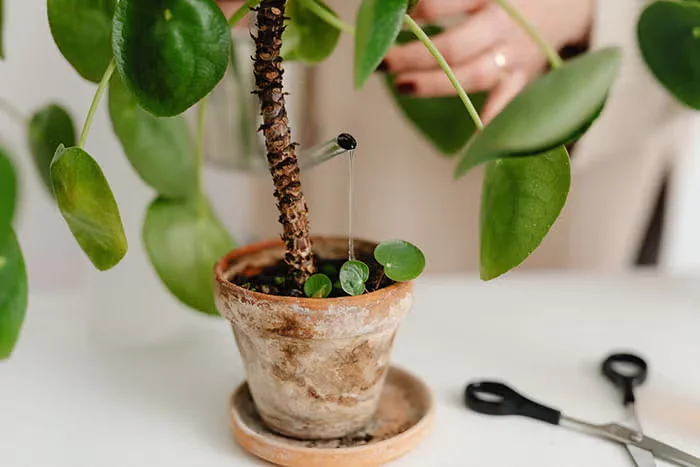
- There are exceptions to every rule, but for the most part I water my houseplants when the top inch or so of potting mix feels dry to the touch. As you get to know your houseplants, you'll eventually know when they need water by the weight of the pot. If it "feels light," chances are it's time to water—trust me, your hands will learn!
- Plants may need less water in winter, when they're less actively growing. As light levels and warmth increases in spring, watch for signs of new growth. As the plant draws more water from its soil mix to fuel growth, you may find the soil dries quicker and more frequent watering is needed—I always adjust my routine as the seasons change.
- Small pots dry out quicker than large pots, so keep a close eye on these little guys.
- With most plants, you can simply pour the water directly into the potting mix until it begins to run out through the pot's drainage holes. Let the pot drain for a while and then place it back where it belongs. If you use a saucer, or the pot has a connected saucer, check to see if there's water in it after about a half hour. If there is, dump that water out—don't let your plant sit in it!
- Some houseplants do not like water collecting in their crowns—where their stems or leaves meet the soil. These include African violets, cape primroses and certain begonias. Water these houseplants from below; sit their pot in a container of water so that the potting mix draws water up from the pot's drainage holes (or through the sides of the pot if it is unglazed terra-cotta). When the soil surface looks damp, remove the pot from the water and let it drain—I've found this method works like a charm.
- Plants that are watered from below should occasionally be carefully watered from above to flush salts out of the potting mix.
- If you've neglected to water your plant for so long that the soil has dried and pulled away from the sides of the pot, sink the pot in a bucket of water until the potting mix loosens and expands again (provided that the plant is still alive). I've rescued a few plants this way—there's hope!
- Use room-temperature water to avoid shocking the plant—I always fill my watering can ahead of time for this reason.
- There is no need to let water sit overnight before using it on plants. This has been recommended as a way to let chlorine evaporate, but there generally isn't enough chlorine in tap water to harm most plants—so don't stress about it!
- If you have soft water, you can use it to water your houseplants, but be sure to flush the salts that can accumulate in the potting mix once a month or so. Simply pour water into the pot until it runs out the bottom; wait for it to drain completely and then repeat the process.
Take some of the guesswork out of caring for houseplants by choosing durable types and following an expert's advice. You can find foolproof plant recommendations and smart care tips in Tovah Martin'sThe Indestructible Houseplant—it's one of my go-to references.
Even accomplished outdoor gardeners can stumble trying to make plants thrive inside—believe me, I've been there!How Not to Kill Your Houseplantby Veronica Peerless is a cute and informative guide to success with indoor plants.
The New Plant Parentby Darryl Cheng is perfect for growers who like to understand the "why" behind advice. An engineer and analyst by trade, Cheng shows readers how to observe their spaces and their plants and base their decisions on plant purchases and care routines off of those observations—I really appreciate his thoughtful approach.