“I love shrubs for so many reasons — they ask so little, they look great across multiple seasons, they feed and shelter birds, some even feed us, and they're just so versatile in the garden. With…”
Hibiscus
Hibiscus syriacus
I love shrubs for so many reasons — they ask so little, they look great across multiple seasons, they feed and shelter birds, some even feed us, and they're just so versatile in the garden. With today's smaller yards and busier lives, breeders have come up with petite varieties of classic shrubs that squeeze into tighter spaces without any pruning. These compact selections are a natural fit for container gardening, too.
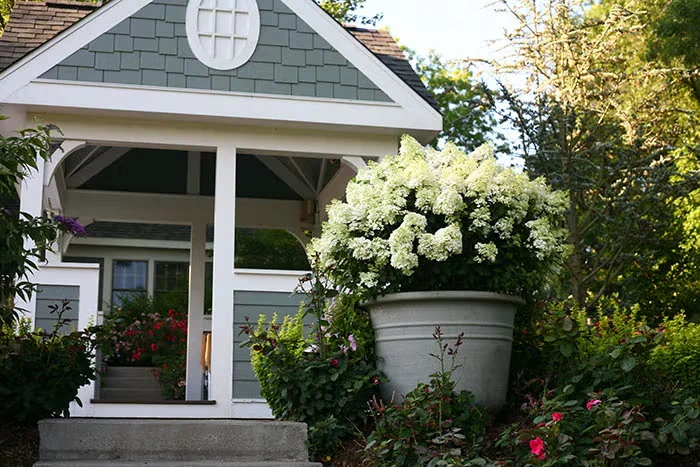
Pair the right shrub with the right pot and you've got a long-lasting, even year-round focal point. It makes a simple but strong statement in the garden or marks a transition between spaces. If it's not too heavy, it becomes a movable detail you can rearrange. In a small garden, potted shrubs work beautifully as dividers and privacy screens. On patios, courtyards and balconies where everything lives in pots, shrubs bring diversity and scale, giving perennials and annuals a natural backdrop to shine against.
Pots also open up planting possibilities that your local conditions might otherwise rule out. Dying to try a shrub that's not hardy in your zone? Plant it in a pot and move it under cover for winter. Itching to grow blueberries, camellias or other acid lovers even though your soil is alkaline? Pop them in a pot with a tailor-made acidic growing mix and you're set.
When you're picking a shrub for a container, go for one that's naturally small or a variety bred for a compact habit. Or you can choose a larger shrub if you plan to transplant it into the ground within a few years, or if you're up for keeping it in bounds through regular root pruning. Whatever you pick, in my experience you should match it to a container that's two to three times the size of the shrub's nursery pot.
There are two key things I always keep in mind for growing requirements. First is winter hardiness. Pick something rated for two USDA zones colder than yours — so if you garden in Zone 6, the shrub should handle Zone 4 winters. If it's not that hardy, plan to tuck it into a cold but sheltered spot for winter. The container matters too. In cold-winter areas, trust me, make sure it's frost-proof so it won't crack when temperatures bounce around.
The second big thing is moisture. Soil in containers dries out way faster than ground soil — I've learned this the hard way. You can grow a shrub that loves damp conditions, but be ready to water it maybe twice a day during summer's peak. Even drought-tolerant potted shrubs will probably need more water than you'd think, especially when it's hot and windy out. And whatever container you pick, make sure it has good drainage holes.
If you go with a large container and shrub, their combined weight will be serious — so put that pot in its final spot before adding soil and the shrub. Use a well-draining mix that meets any special needs of what you're growing. Planting steps are the same as always: set the shrub at the same level it sat in its nursery pot, water it in really well, and top with mulch to hold moisture and keep soil temperature steady.
Each spring, I like to give my potted shrubs a topdressing of compost and some slow-release fertilizer — it really helps refresh the potting mix and keep the shrub happy.
If you notice slowed, weak, or no growth, that's your cue to repot. Repotting is a great chance to root prune, which breathes new life into the plant and can even let you keep it in the same container. Shrubs that do outgrow their pot can move up to a bigger one or go into the ground — which frees up your favorite pot for something new entirely.
Image courtesy ofProven Winners