“Elephant ears (Colocasia and Alocasia) are those gorgeous tropical plants we all love for their stunning, often enormous leaves — they can be lime green, variegated, or nearly black. These summer…”
Air Plant
Tillandsia usneoides
Elephant ears (Colocasia and Alocasia) are those gorgeous tropical plants we all love for their stunning, often enormous leaves — they can be lime green, variegated, or nearly black. These summer lovers grow from a bulb you'll want to plant in spring. They do beautifully in pots, as long as you follow a few simple guidelines.
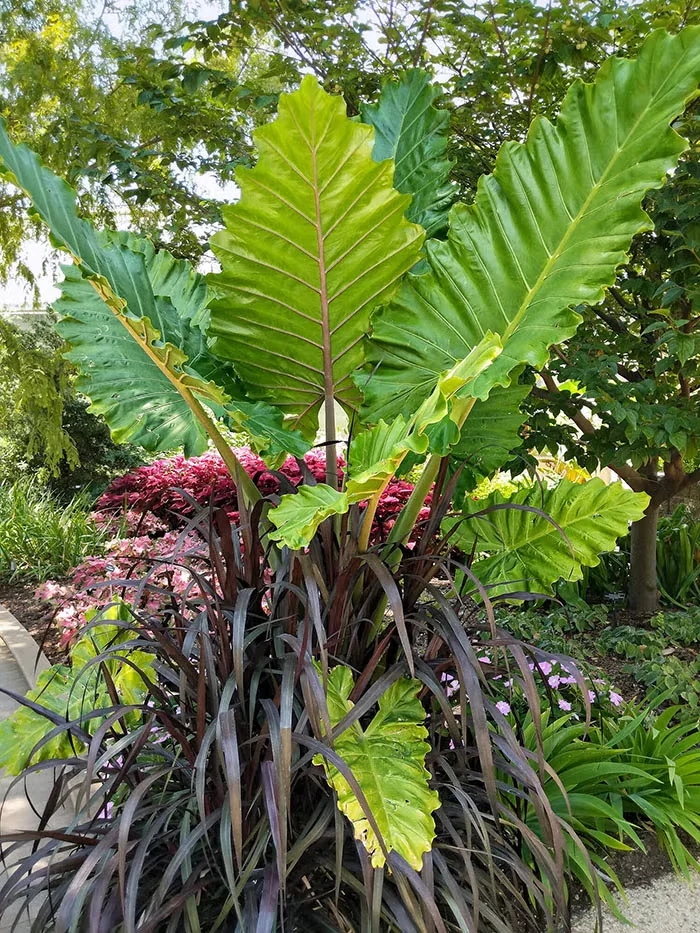
Alocasia grow more upright than Colocasia, with very large leaves that can stand nearly vertical. What I love about Alocasia is that it can transition to a houseplant and stay green all year. Meanwhile, the relatively smaller leaves of Colocasia varieties need a dormant period — these plants will die back in fall and rest through the winter.
To grow either Alocasia or Colocasia in a container, here are the key tips I swear by:
Choose a container that's at least 18 inches wide and 16 inches deep for Colocasia varieties, or 36 inches wide for the larger Alocasia varieties. Going with large pots lets these plants reach their full potential, and trust me, it means you won't have to repot for several years. Bigger pots also dry out more slowly, which is great because elephant ears need consistently moist soil.
The container should be made of a nonporous material like plastic, fiberglass, or glazed clay — skip the plain terra cotta. This really helps hold moisture in the soil, which your elephant ears will appreciate.
Adding compost to a commercial potting mix boosts its moisture-holding ability and adds nutrition — and elephant ears are heavy feeders, so they'll thank you. I also fertilize mine about once a month following package directions to push growth, or treat them to a slow-release fertilizer right at the start of the season.
Check your containers daily to see if they need water — elephant ears are thirsty!
Image credit:Nadya J./anestwithayard.com