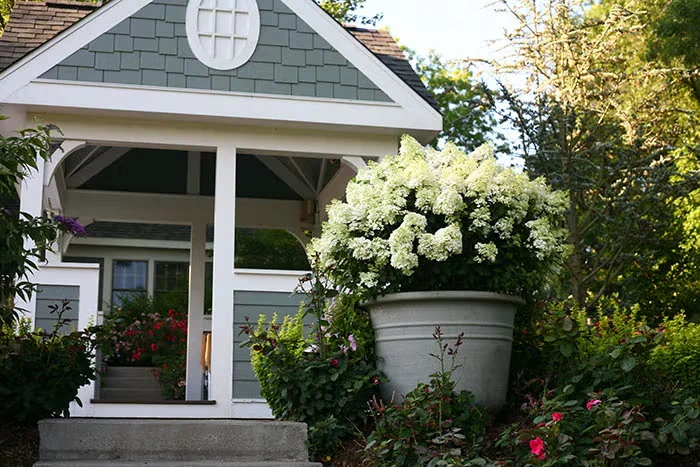
“I've found that growing roses in containers gives you so much flexibility in garden design and upkeep. Put large pots on casters and you can easily shift them into a starring role or chase the best…”
Hibiscus
Hibiscus syriacus
I've found that growing roses in containers gives you so much flexibility in garden design and upkeep. Put large pots on casters and you can easily shift them into a starring role or chase the best sun as the season changes—and trust me, roses absolutely need full sun to stay healthy and bloom their hearts out.
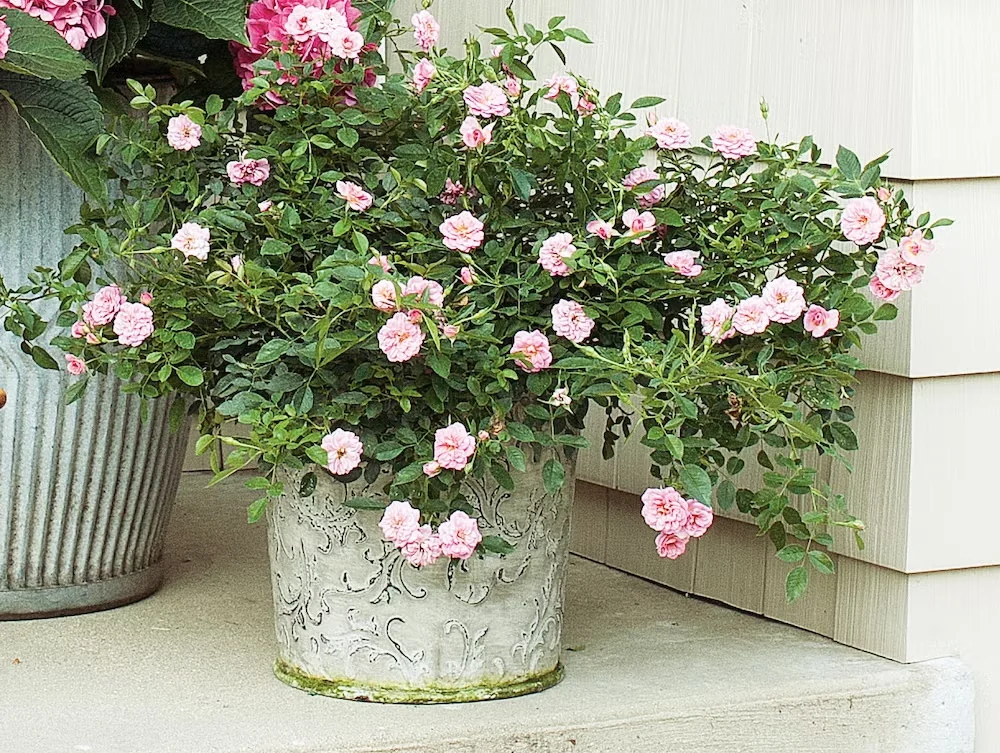
Container-grown roses are also easier to maintain, which I really appreciate. A big pot means you can deadhead spent blooms, clip off diseased leaves, and keep the soil tidy without all that bending over. And these are all must-dos if you want gorgeous, long-blooming roses.
Choosing roses and pots
When picking a rose for a pot, I always go for compact, disease-resistant cultivars. Climbers and big shrub roses really do better in garden beds and borders, but miniature roses and ground-covering types can absolutely flourish in containers.
If your container is staying outside through winter, choose a rose rated for at least one USDA Zone colder than yours. (For example, in Zone 6, I'd pick a rose hardy to Zone 5 or below.) And don't forget to make sure the pot itself can survive your winter weather, too!
Watering and feeding roses in containers
I won't sugarcoat it—growing roses in containers does mean you need to be a bit more on top of watering and feeding.
Remember, containers dry out way faster than garden beds, and the smaller the pot, the faster the mix dries out. I check my potted roses every single day, especially during hot, dry, or windy stretches. When the mix feels dry about an inch down, it's time for a good, deep soak.
All that extra watering leaches nutrients from the potting mix, so you might need to feed every two weeks—or even weekly—with a diluted liquid fertilizer. I also like to add a granular slow-release fertilizer at the start of the growing season to give them a solid foundation.
Repotting
As your rose grows, either size up the container to keep things in proportion, or prune both the plant and its roots to keep it compact. (To trim roots, just slide the plant out of the pot.) I refresh the potting soil every few years—it's a great opportunity to give the roots a trim, too!
Winter protection for roses in containers
If you get frost and freezing temps, tuck your potted roses into a garden shed or basement if the container isn't freeze-proof or the rose isn't quite hardy enough for your area. If you've got the garden space, you can also sink the whole container into the ground in fall and mulch over it. Honestly, the easiest route is just choosing a variety and pot that are naturally suited to your climate!